|

NEWS -
Christmas 2014
Phil & Jenny opened their home for the 2014 Bartelme Christmas on
Dec 27th. Abby and her fiancé Steve made the trip from Texas
to join us. Lily Bartelme celebrated her 8th birthday.
Thanks to all the Bartelme family for the great food & time.
Pictures from Bob, Greg & Pete. Check
them out. Any comment, corrections or additions; please let me
know. [email protected]
2014
Fall Campout
Back to the 900 area camp ground for our 42nd annual camping trip.
The weather bordered on nasty. Damp and light rain for 3 days.
Thursday & Friday the temps got close to 60 but Saturday it had a
hard time making it to 40. We got about an inch of rain over the
first 3 days. In the long run, it never dampened spirts or slowed any
activities. We had a great time. 13 different chili variations for
the Sat night dump.
Pictures from Greg, Adam, Hannah, Angie & Pete. Check
them out. Any comment, corrections or additions; please let me
know. [email protected]
Margaret
Bartelme's 95th Birthday
April 5th was a great day to celebrate Margaret Bartelme's 95th
Birthday. There was a great turn out with Joe & Diane making the
trip from Texas and Bill, Ginger & Will driving up from Missouri.
Thanks to everyone for making this a special day.
Pictures from Greg, Bob, & Pete. Check
them out. Any comment, corrections or additions; please let me
know. [email protected]
Christmas 2013
Phil & Jenny hosted the family gathering at their new home. The
home that was formerly owned by Anne & family, so it was like old
times. As always, it was a great time to see & catch up with everyone.
Thanks to all the Bartelme family for the great food & time.
Pictures from Bob, Greg & Pete. Check
them out. Any comment, corrections or additions; please let me
know. [email protected]
2013
Fall Campout
For our 41st year we decided to try the 900 area camp ground again.
The area is more secluded and quiet but the ranger still found us and
hassled us for being too loud. The temperatures ranged in the mid
70's to low 40's at night. A great time. We had 12 families represent
the chili dump. We missed Sara & Wayne.
Pictures from Greg, Bob,Vince & Pete. Check
them out. Any comment, corrections or additions; please let me
know. [email protected]
Dennis
Doyle 70th and Wayne Adler & Richard Bartelme 60th Birthdays
September
1, 2013
On September 8th 1943, Dennis was born to Thomas Doyle &
Sophie Gorski. Dennis married Chris Bartelme in 1988. On August 1st
1953, Wayne was born to Henry Adler & Gisella Hann. Wayne married
Mary Bartelme in 1977. On September 9th 1953, Richard Bartelme was
born to Claude & Margaret Bartelme. September 1st 2013 was the
day to celebrate these 3 oldsters special birthdays. A party was held
in their honor at Lake Ellen. A great turn out and great food.
Check out the Photo Gallery.
Joe
Bartelme's 70th Birthday
June
23, 2013
On June 26th 1943, Joseph Peter was born to Claude & Margaret
Bartelme. On June 23rd 2013, a party was held in his honor to
celebrate his 70th anniversary. It was a great day for a a party.
Joe's childhood friend Joe Melter joined us for the celebration. We
also took this occasion to celebrate Logan Bartelme's 4th birthday.
Check out the Photo Gallery
Theresa
Bartelme & Joel Schulteis Wedding
June
22, 2013
On June 22nd 2013, Terri Bartelme married her grade school friend
Joel Schulteis. It was a beautiful ceremony for a beautiful bride.
Joel is one lucky guy.
Check out the Photo Gallery
Pictures from Greg, Bob, & Pete. Any comment, corrections or
additions; please let me know. [email protected]
Margaret
Bartelme's 94th Birthday
This year the party was on Saturday 6th April at her apartment
complex. There was a great turn out & plenty to eat and talk
about. The weather was cool & rainy but the sun managed to come
out for a brief time so the kids could trash my truck.
Looking forward to her 95th.
Pictures from Greg, Angie, Bob, Wayne & Pete. Check
them out. Any comment, corrections or additions; please let me
know. [email protected]
Christmas 2012
Patti once again hosted the Bartelme Christmas Gathering on Dec 29,
2012. As always, it was a great time to see & catch up with everyone.
Thanks to Patti and all the Bartelme family for the great food & time.
Pictures from Bob, Greg & Pete. Check
them out. Any comment, corrections or additions; please let me
know. [email protected]
2012
(40th) Fall Campout
40 years later and we're still doing it. A lot has changed and a lot
has not. Spending time with family & friends can not be replaced.
The Fall Campout has always offered us the opportunity to experience
a great time and create precious memories.
This year the Campout took place from Oct 4th thru the 7th. The
temperature started off mild on Thursday but quickly turned cool &
windy. Temps ranged from the low 30's to the upper 40's. The chili
dump was represented by 11 families.
Pictures from Greg, Angie, Tim & Pete. Check
them out. Any comment, corrections or additions; please let me
know. [email protected]
Mary
Adler's 60th Birthday
Mary Rose Bartelme Adler was born on August 16th 1952. On this her
60th year of life, a party was held at the Bartelme Resort on the
18th of August in her honor. It was a great day and good food. We
grilled 3 turkeys. It was along time ago since the family was all together.
Pictures from Greg, Angie, Joe & Pete. Check
them out. Any comment, corrections or additions; please let me
know. [email protected]
Margaret
Bartelme's 93st Birthday
A party was held in her honor on Saturday 7th April at her apartment
complex. There was a great turn out. As always there was plenty to
eat and talk about. The weather was mild so the younger ones could
play outside. The newest Bartelme Mason was a big hit.
Pictures from Greg & Pete. Check them out.
Any comment, corrections or additions; please let me know. [email protected]
Alivia
Adler's 1st Birthday
Alivia celebrated her 1st birthday with her Dad, Grand parents &
her Aunt. The party was held in Sheboygan at Wayne & Mary's.
Sara sent some pictures. Check
them out. Any comment, corrections or additions; please let me
know. [email protected]
Margaret
Bartelme's 91st Birthday
This year, Mom's birthday fell on Easter Sunday. A rare occurrence. A
party was held in her honor on Saturday 3rd April at her apartment
complex. Over 50 Bartelme Family members attended. As always there
was plenty to eat and talk about. The weather was pleasant so the
younger ones could play outside. The 3 youngest Bartelmes' were in attendance.
Pictures from Bob, Sara, Greg & Pete. Check
them out. Any comment, corrections or additions; please let me
know. [email protected]
Christmas 2009
As in the past years, Patti hosted the Bartelme Christmas Gathering
on Dec 26, 2009. Snow made the ride to Milwaukee's East side a
slippery challenge, but over 50 Bartelme members gathered for the
festivities. The main treat was the 3 new great grand children
of Mom.
Thanks to Patti and all the Bartelme family for the great food & time.
Pictures from Bob, Sara, Greg & Pete. Check
them out. Any comment, corrections or additions; please let me
know. [email protected]
Fall
Campout Oct 2009
The 37th Annual Fall Campout took place October 1st thru the 4th. We
had a few less people this year as some had to go to Florida and some
couldn't hack the weather. The weather wasn't that bad as temps
ranged from 37 to 58 degrees. We had rain on Thursday & Friday,
but never a washout. No sun to speak of and we might have seen the
full moon briefly during our late night experiments. We had 10
families contribute to the chili dump and we almost finished the 7 gals.
Like the prodigal son, Chris Palasz and his friend Adam joined us. It
was great to see him.
There were a lot of pictures taken by Greg, Tim, Vince & Pete.
Here are some of them (100). If you would like a hi res copy of any
let me know. Check them out.
Any comment, corrections or additions; please let me know. [email protected]
Maxwell Phillip
Bartelme July 31, 2009
On July 31, 2009, Maxwell was born to proud parents Jenny & Phil
Bartelme .
Max came into our lives at 7 lbs 7 oz and 21 inches.
Here are some pictures
- check it out!
Send congratulations to Jenny &
Phil
Logan Michael
Bartelme June 28, 2009
On June 28, 2009, Logan was born to proud parents Anna and Dustin
Bartelme .
Logan came into our lives at 8 lbs 2 oz and 19.5 inches. The
report is that he has red hair!
Here are some pictures from
Dustin & Anna - check it out!
Send congratulations to Dustin
& Anna
Snail mail
2809 Andes Dr. Apt #3
Madison WI 53719
Margaret
Bartelme Celebrates 90 years
On April 4, 2009, a surprise party was held in Sheboygan WI to
honor Margaret (Becker) Bartelme 90th Birthday. Many of the
Becker & Bartelme family members attended. Mom's 92 year old
brother Frank came from Henderson NV. All together there were 113
family members. We had a great time and the food that was supplied by
everyone was superb. The time we had was too short for everyone to
connect with all the relatives. Hopefully we will be doing this again
in 5 years.
Mom was so grateful for all the attention and is still talking about
it. Thank you all for helping to make this celebration such a success.
There were hundreds of pictures taken by Joe, Chris, Vince, Greg,
Sara, Carla, Dustin & myself. I narrowed it down to about 100
pictures for the slide show. Check it out.
We have a DVD of Mom's life that was running during the party as
well as a CD with all the pictures of the Becker Family . If you
would like a copy, let me know
and I will send them to you. If you want a copy of the pictures in Hi
res, I can send them also. Too big to email or download!
Any comment, corrections or additions; please let me know. [email protected]
Alivia Marie Adler
April 25, 2009
On April 25, 2009, Alivia Marie was born to proud parents Michael
Adler and Melissa Grunow .
Alivia came into our lives at 7 lbs 11 oz and 21 inches.
Here are some pictures from Mary
- check it out! If you want to download the complete set in hi res
(13 mB) click here
Send congratulations to Melissa.
Snail mail:
1415 St. Clair Ave.
Sheboygan WI
53081
Bob Bartelme
Celebrates 60 years
Robert Leonard Bartelme was born on February 11, 1949 to Claude &
Margaret Bartelme.
On Feb 7, 2009 this old man celebrated his 60th birthday with a great
party held at his house in the West
Bend area. They even let Joe out of the old
folks home to come to Wisconsin
to help party.
Here are some pictures from the
party taken by Joe, Vince, Greg & myself. I created a DVD of the
event. If you would like a copy,
let me know and I send it to you. If you wart a copy of the
pictures in Hi res, I can send them also. Too big to email or download!
Dustin Bartelme
& Anna Achten Wedding
Anna Achten married Dustin Bartelme on January 24 2009. Their
beautiful daughter Lily was the flower girl. The wedding took place
at "The Gates of Heaven" in Madison,
WI. The Gates of
Heaven, built in 1863, is the fourth oldest surviving synagogue
building in the nation. The reception was held at the home of Richard
& Carla.
Here are few pictures from
the Wedding & the reception. If you want to download the complete
set in hi res (22 mB) click here
Send congratulations to Dustin,
Anna & Lily.
2809 Andes Dr. Apt. #3
Madison
WI 53719
Christmas 2008
Patti hosted the Bartelme Christmas Gathering on Dec 27, 2008. In
addition to the water seeping into her basement from the unusual
foggy December rain, 50 Bartelme members swarmed into her home. We
are very grateful for her hospitality.
Lily Bartelme celebrated her 2nd birthday on the 27th.
Here are a few (50) pictures from the wonderful day . Check
them out. I created a DVD of the grand event. If you would like
a copy; contact me, I'll send
it to you.
Fall Campout Oct 2008
The 36th Annual Fall Campout took place the 1st weekend in October.
This year we occupied 10 campsites and had over 40 people attend. On
Thursday we had rain but the remainder of the weekend was dry with
frosty mornings and cool days.
There were hundreds of pictures taken and it has taken me a bit of
time to narrow it down to about 200 pictures for our web site. I
created 9 separate slide shows to divide the pictures up into
categories. Check them out. I
did not put any high resolution downloads on the site due to the
size. If you want a copy of the pictures in hi res; contact
me, I'll send you a CD.
Jackson John
Bartelme August 19, 2008
On August 19, 2008, Jackson
was born to proud parents John Bartelme and Danielle Gordon .
Jackson
came into our lives at 6 lbs 11 oz and 19.5 inches.
Here are a few pictures
from JT - check it out! If you want to download the complete set
in hi res
(5 mB) click here
Send congratulations to JT & Danielle.
Snail mail:
4706 Ivywood Tr.
McFarland, WI 53558
Joseph Bartelme
April 25, 2008
On April 25 2008, Joseph was born to proud parents Greg &
Kimberly. Joe came into our lives at 8 lbs and 21 inches.
Here are a few pictures
- check it out! The Slide show has more pictures than what's on the
page. If you want to download the complete set (21 mB) click
here
Send congratulations to Greg,
Kimberly and Adam.
Margaret Bartelme's
89th Birthday
On April 5 2008, a party was held at Mom's apartment complex to honor
her 89th birthday. It was the first really nice day of spring with
sun and temperature at 70 degrees. There were still a lot of piles of
snow, but nobody saw them. Mom's complex has a community dinning room
with 2 patio doors. The doors were open and people were in and out
all day. The young adults had a good time drawing on the sidewalk
with chalk. We had a great turn out and great food. Thanks to
everyone for their contribution.
A lot of pictures where taken by Greg, Dustin, Bob & Sara. . Here
are some (2 pages worth) - check it out! The Slide show is on
the 1st page. If you want to download the complete set (13 mB) click
here. If you don't want to download then, I'll be happy to send
a CD. Let me know.
Any comment, corrections or additions; please let me know. [email protected]
Christmas 2007
Here are some pictures from Christmas at Patti's. There are some nice
family pictures. I'm not sure who took them, but Thanks! Check
them out.
Fall Campout Oct 2007
The 35th Annual Fall Campout took place the 1st weekend of October
2007. As it turned out it was by far the warmest campout we've ever
experienced. It was more like August than October as shorts and
sandals were the clothes of choice over the layers of winter wear. It
was first time in 35 years that the hike to the beach meant swimming.
Marty took a great bunch of pictures. Check
them out.
Down load the complete set in
higher resolution.
Lily Bartelme's 1st Birthday
On Dec 27 2007, Lily Bartelme celebrated her first birthday. Lily is
the daughter of Dustin Bartelme & Anna Achten. Carla Bartelme
wrote a letter to Lily for her birthday. Here it is.
Happy First Birthday Dear Lily
How wonderful it has been seeing you grow from a totally
dependent nugget into a seeker of skills and independence.
I cherish our one day a week together when
you come to grandma and grandpa's house.
Of course you have had your special activities. Before you
could walk you'd like me to take you outside to see the parking
sign-you enjoyed looking at the front and back. Then we would
go over to the lock on the shed-you liked to touch and hold the
lock. Then it was off to the mailboxes, where again you were
drawn to the locks on the mailboxes-so round, and in a pattern.
Later you became interested in the numbers, and smiled when I read
them to you, as you pointed-one to one correspondence and other math
and reading skills. The rock with its little puddle was the
last stop on our daily field trip.
Inside the house, you learned to take an
active role in your education by pointing to things and places you
wanted to explore. Grandpa would sometimes join us for lunch,
and you turned some of your first pages in a book on his lap.
You developed a fine pincer grasp, and have excellent motor
skills. You drew your first picture here with red and green
washable markers, and you were very pleased as you discovered that
you made your marks. However, the artist in you gave way to the
mechanical engineer, as you became more interested in putting on and
taking off the marker caps! You twisted and pulled, astounding.
Once you began to walk, there was no
stopping you. You wanted me to go with you with my fingers for
support as you cruised around the living room/kitchen circle, and
then the stairs! I tried to teach you to crawl up the stairs,
but you didn't seem interested-you wanted to go upstairs the way
grownups do-alternating feet! You were so short that you had to
lift your leg sideways just to get your leg over the threshold of the
stair. This difficulty did not deter you. In fact, you
became more determined than ever to master the skill. It was
hard physical work, and you repeated this journey up and down the
stairs several times a day. . You have now gotten to the point
of wanting to carry a toy in one hand as you climb the
stairs. You would love to be able reach the railing for
yourself, but I have to lift you. Some day you will be able to climb
the stairs and hold the railing at the same time-you'll keep trying
until you do.
You are so fortunate to have such a loving family and friends to love
you, and we all wish you a wonderful year ahead. Every day you
are a precious gift to open and cherish. I love you always,
Grandma Carla
See the pictures of Lily's adventures.
Any comment, corrections or additions; please let me know. [email protected]
Adam Bartelme 1st Birthday
Adam celebrated his 1st birthday with his parents Greg & Kimberly
(often refered to as Grimberly) and many of the Bartelme family on
June 3rd 2007. The party was held at the Bartelme Resort. The day
provide a good deal of rain but eventually cleared in the later part
of the day.
Grimerbly hosted 28 adults and 12 small adults. The food was great
and the company even better.
Here are a few pictures of the boy.
Any comment, corrections or additions; please let me know. [email protected]
Christopher Wayne
Bartelme & Janet Iwata's Wedding
Janet Iwata and Wayne Bartelme were married on May 12th 2007.
The wedding was held at the house of friends of theirs, on the east
side of the west Maui Mountain a few thousand feet above the
ocean. As you can see in some of the pictures it is a steep
drop off into the ocean not too far from their house. The
entire event was outside; under a tent and around the outside of the tent.
Chase was the best man, and Janet's sons Jordan and Davin (Davin has
the buzz cut) gave Janet away. In the pictures, the white
flowers of the ring were gardenias (Janet's favorite) and the red are Bougainvillea.
The food was Japanese style cooking on a hot plate. They had
several different meats and fish: beef, chicken, scallops, shrimp,
and lobster.
Next year Jordan will be attending Chaminade University of
Honolulu. He will be playing on their varsity soccer team,
NCAA, Division 2.
Davin is attending University of Hawaii. He is presently on the
varsity football team.
Joe took some pictures . Here are some
- check it out! If you want to download the complete set in Hi Res
(10 mB) click here. If you
don't want to download then, I'll be happy to send a CD. Let me know.
Send your congratulations to Wayne
& Janet
Any comment, corrections or additions; please let me know. [email protected]
Margaret Bartelme
turns 88 years young
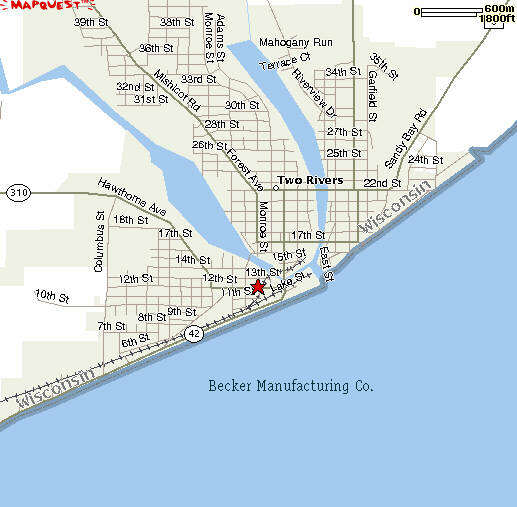
It was April 4th 1919, when Margaret Louise Becker was born in Two
Rivers WI to Louise & Frank Becker. To some she is known as Mom,
to many others is known as Grandma, Grum or Great Grandma.
On April 7 2007, a party was held at Mom's apartment complex to honor
her 88th year of being a special person. With Easter the next day the
party definitely had an Easter/Spring theme. We had a great turn out
and great food. Thanks to everyone for their contribution.
A lot of pictures where taken by Greg, Dustin, Bob & Pete. . Here
are some (2 pages worth) - check it out! If you want to download
the complete set including some not on the picture pages (12.5 mB) click
here. If you don't want to download then, I'll be happy to send
a CD. Let me know.
Any comment, corrections or additions; please let me know. [email protected]
Pete Bartelme turns 60
On February 5 1947, Peter David Bartelme was born to Claude &
Margaret Bartelme. It happened at the end of a major blizzard that
crippled the city of Milwaukee for weeks. Mom tells me that they
finally plowed their street on Feb 4th.
On Feb 10 2007, Bob hosted a party for Pete at his home in the West
Bend area. There was a great turn out to celebrate this old
man's 60th year of survival. Thanks to everyone and special
thanks to Bob & Marilyn for hosting the event.
Pete, Joe & Greg took a few (ok a lot) of pictures. Here
are a few - check it out! If you want to download the complete
set (4.5 mB) in Low res click here.
If you would like a set in Hi res, contact
me and I'll send you a CD.
Want to
read a story about the Blizzard of 47?? The Home movies are cool!!
Any comment, corrections or additions; please let me know. [email protected]
Lily Katherine Bartelme
On December 27th 2006, Lily Bartelme was born to the proud parents
Dustin Bartelme & Anna Achten.
Lily weighed in at 7 lbs, 10 oz and 19 1/2 inches long. Lily is
currently still in the hospital due to jaundice, but should be home
with Dustin & Anna shortly.
Enjoy some pictures! Contact Anna
& Dustin
Luke Wayne Bartelme
On October 28th 2006, Luke Bartelme was born to the proud parents
Paul & Danica.
Luke weighed in at 9lbs, 7 oz and is 21 inches long.
Enjoy some pictures! Contact Paul
& Danica
Tim Bartelme &
Sue Stannard Wedding
Sue Stannard married Tim Bartelme on August 26th 2006. Sue has 2
children Nickolas & Meghan. The wedding took place at a quaint
church "The Gardens" north of Allenton WI while the
reception was held at Memories near Port Washington.
Here are few pictures from the
Wedding & the reception. If you would like to see more pictures
or get some copies at higher resolution contact Tim.
Enjoy!
Adam Gregory Bartelme
On June 4th 2006, Greg & Kimberly Bartelme became proud parents
to Adam Bartelme
Here are some pictures. Enjoy!
Greg &
Kimberly's Wedding
On Feb 18 2006 Greg Bartelme & Kimberly Van Duser got married in
Las Vegas. Kimberly's sister Laura and her fiancé Dean joined
them in Vegas.
Here are some pictures. Enjoy!
The Bartelme Family Book
is available
The Bartelme Family Book (2004 Edition) is now available for On Line
viewing or for download. For
On Line viewing, click on the link in the left column. The download
is a large pdf file (60 megabytes) and may take some time to download
if you have dial up like me. I can make a copy of the book on CD and
mail it; if you send me your
snail mail address. Included with the download is a Help document
that will hopefully explain the book format. There are still a lot of
family members to add to the book and everyone's help is appreciated.
Old and new digital pictures will enhance future editions. If you can
get any digital copies of old photos, we can add them to the Photo
Gallery chapter. Old & new wedding pictures, family group
pictures, etc will only insure a permanent record of our family
history. Also very important to our history are the
"stories" and "factual information" about our
family. It is these stories that make the family and give us a sense
of connection. As you read the book, you will see how stories /
information make the book. Please send me any and all the
factual information as well as family stories so we can include them
in future editions of the book.
Special Thanks to Mary
Kay Schultz for her vast research into our family.
I have also added 2 links in the left column to other Bartelme Family
web sites. Check them out.
Any correction, please let me
know and I'll get them changed.
Richard Bartelme & Wayne Adler turned the big "50"
On August 1 1953; Wayne was born to Henry & Gisella Adler
and on September 9,1953; Richard was born to Claude &
Margaret Bartelme. Wayne married Mary Bartelme on Sept. 2 1977. Wayne
& Mary live in Sheboygan WI. Wayne is a chemist for Aldrich
Chemical in Sheboygan Falls. Richard is married to Carla and he
manages Felly's Greenhouse in Verona WI were they also live. On
August 31 2003, a party was held at the Bartelme Resort to honor
these 2 fine old men who reached the 50-year milestone. We had
a great turn out with great weather. 25 older adults and 11 young
adults help celebrate and consume the 20 lb of prime rib along with
tons of additional food. Joe and Diane flew in from San Diego to help
usher these old men into the "over the hill" crowd. We were
also honored with a the presence of a newly acquainted Bartelme
cousins, Lisa Bartelme Hurley and her 2 children Miranda & Ross.
Lisa, who has a twin Lori, is the Director of the Plymouth WI Chamber
of Commerce and lives with husband Tony near the cottage in Adell WI.
Lisa's father Glen is a first cousin to Claude (Dad). Glen lives in
Manitowoc and operated Bartelme Plumbing for many years. (Contact
Lisa)
Thanks to everyone for a great time
Here are some of the pictures that
were taken at the party. If you want to download the complete set of
photos, click here (2.8 MB)
Any comment, corrections or additions to this story; please let me
know. [email protected]
The Bartelme Family Calendar
goes On-Line
You can now access the Family Calendar
on line by clicking on the link on the left column of this page. You
can view each month as well as download a printable copy (PDF) month
by month or the whole year.
As special event come along, please let me
know and I'll add them to the calendar.
Joe Bartelme turns the big 60
on June 26th 2003
On June 26 1943; Joseph Peter was born to Claude & Margaret
Bartelme. On June 25 2003, a delegation of Bob & Marilyn,
Mom, Wayne, Mary, Sara & Mike Adler and myself headed to San
Diego to help Joe celebrate. Joe & Diane were gracious host and
showed us the best of times. Our trip include the San Diego Zoo, Sea
World, La Jolla beach, Mission Ridge canyon, Coranado Island, first
Catholic church in California, tide pooling, Ocean Side boardwalk and
Torry Pines State Park. We managed to also spend some time with Paul,
Danica and their beautiful son Jacob who was born a week earlier on
the 18th of June. Danica's mother hosted our crew for a great
barbecue and birthday celebration on Sunday 29th. The trip was a
great time and one that will not be forgotten.
Thanks to everyone for the great hospitality
These are just a few of the pictures
that were taken by Bob, Wayne, Sara and myself. If you want to
download the complete set of photos, click
here (4.4 MB) If you are interested in a CD full of
pictures contact Bob or myself.
Any comment, corrections or additions to this story; please let me
know. [email protected]
Newest Addition: Kassidy Hope
Mary Bartelme-Adler turns 50 years young
On August 16 1952; Mary Rose was born to Claude & Margaret
Bartelme. On August 17th 2002; a party was held to celebrate her 50th
birthday. It was held at the Butler Inn on the west side of Milwaukee
and was a complete surprise to Mary. Her girl friend got her there
under the guise of taking her out for her birthday. It was a great
turn out, including Joe flying in from San Diego.
Thanks to Bob, Sara & Wayne for setting up the party.
Take a look at the pictures. If
you want to download the complete set of photos, click
here (2.7 MB)
Any comment, corrections or additions to this story; please let me
know. [email protected] |